


01 /
How to use this path
Most people get into crypto back to front: they buy whatever is trending on social media, leave it on the first platform they find and learn what a seed phrase is the day they lose it. That order is the one that costs the most money. As I say in my video on the seven beginner mistakes, it's almost never bad luck: it's repeating the same mistakes over and over.
This path flips that order. Understand first, then protect, then plan, and only at the very end trade. Six levels, ten guides. You don't need to read them in one sitting, but you should respect the order once real money is involved: skipping security to get to trading faster is like learning to overtake before you learn to brake.
One note before you start: this site is Spain-first. The rules, taxes and regulators mentioned here are the ones that apply if you live in Spain or elsewhere in the EU, such as the MiCA regulation, Spain's securities regulator (CNMV) and the Spanish tax agency.
Every level has a simple exit test: if you can explain what you learned to someone else in your own words, move on. If not, go back to the guide or the video. Nobody is chasing you. The crypto market never closes, nights and holidays included, so it will still be there tomorrow.
Above this text you'll find every guide on the site, grouped: the ones on this path and those in the Security, Exchanges and Cryptocurrencies sections. If you already know what you're after, go straight there; if not, follow the map.
02 /
Level 0: “I know nothing” (and that's fine)
If you've never bought a cryptocurrency, your first goal isn't buying. It's understanding what you're looking at. Start with the guide on what Bitcoin is, the foundation for everything else: where it comes from, how the network works, why there will never be more than 21 million and what the risks are, assuming nothing.
Keep the crypto glossary open next to it. Wallet, exchange, halving, seed phrase, network fee: much of the early confusion is just vocabulary. When a word trips you up, look it up there before asking a stranger on social media to explain it, because that's how a lot of scams begin.
For the technical side there's a shortcut: the video on the blockchain explained without jargon. It uses the idea of a shared notebook, explains why it's so hard to tamper with and spends a whole chapter on “the honest buts”, which is exactly what most explanations leave out.
Chapters (6)
The Cryptocurrencies section collects the Entiende Cripto series for when you want to go beyond Bitcoin. For now, the written profile of each coin is only available in Spanish.
03 /
Level 1: foundations for your first step
With the vocabulary in your pocket, it's time to learn how to start without tripping. The guide on how to start in crypto gets straight to the point: what to be clear about before opening an account, how to choose where to buy, how to make a small first purchase and which mistakes to avoid from day one. It's for you if you already understand what Bitcoin is but have never gone beyond theory. When you're ready to take the step, how to buy Bitcoin walks you through your first purchase on a MiCA-licensed exchange.
The second piece is cycles and halving. The halving is the scheduled cut in the issuance of new bitcoins: it happens every 210,000 blocks, roughly every four years, and the last one was in April 2024. Understanding it helps you put the market's rallies and crashes in context, with the warning attached to my video on the subject: historical patterns don't guarantee future results.
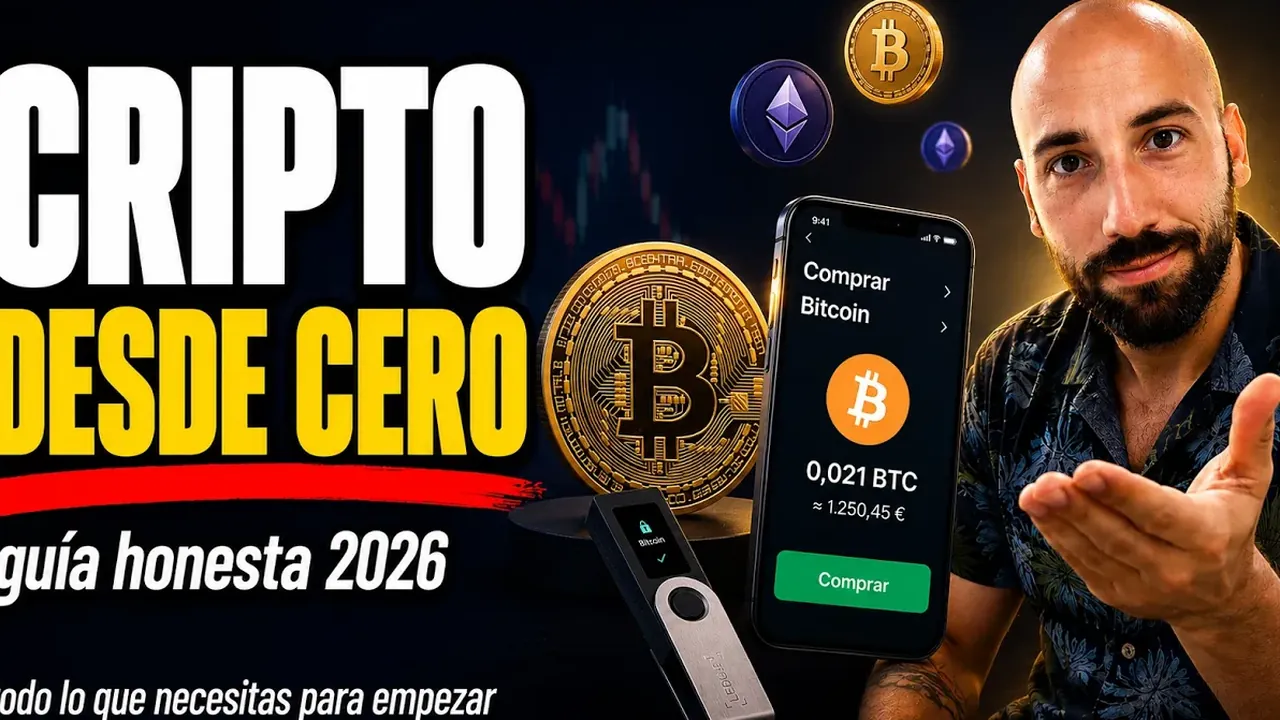
The video for this level is the honest guide to starting from zero. It opens with four golden rules before you begin, then covers the exchange, your first purchase step by step, wallets and the security mistakes that ruin beginners. It also touches on what the Spanish tax agency expects, which I come back to in the last level.
Chapters (7)
By the end of this level you should be able to answer three questions without looking:
- Who validates Bitcoin transactions, and why is no bank needed?
- Where do your coins sit after you buy them on a platform?
- What changed at the last halving, and when is the next one expected?
04 /
Level 2: security before returns
This is where you decide whether you keep what you buy. Crypto has no undo button: a confirmed payment can't be reversed and, as EU supervisors point out, if you lose your private keys you lose access for good. That's why this level comes before any strategy, however dull it seems.
Start with hot vs cold wallet: what each one is, from what amount a hardware device is worth it and how to store your seed phrase without turning it into your weak spot. Then read exchanges and MiCA: since July 1, 2026 only providers authorized by the CNMV or another EU authority may operate in Spain, so knowing how to check a license is no longer optional.
And finish with crypto scams, because scams change faster than any chart: cloned apps that slip into official app stores, fake support agents who message you first, promises of fixed returns. The video below answers the question that puts everything in order: when you buy on a platform, where are your coins really?
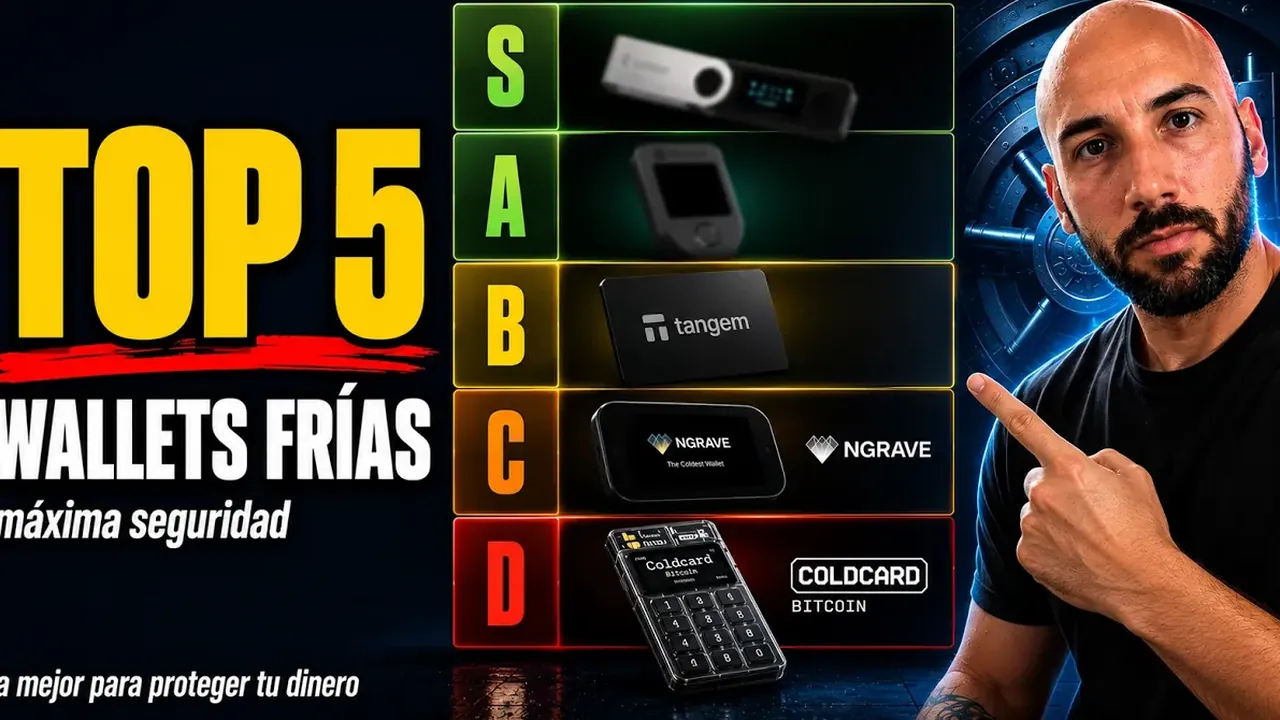
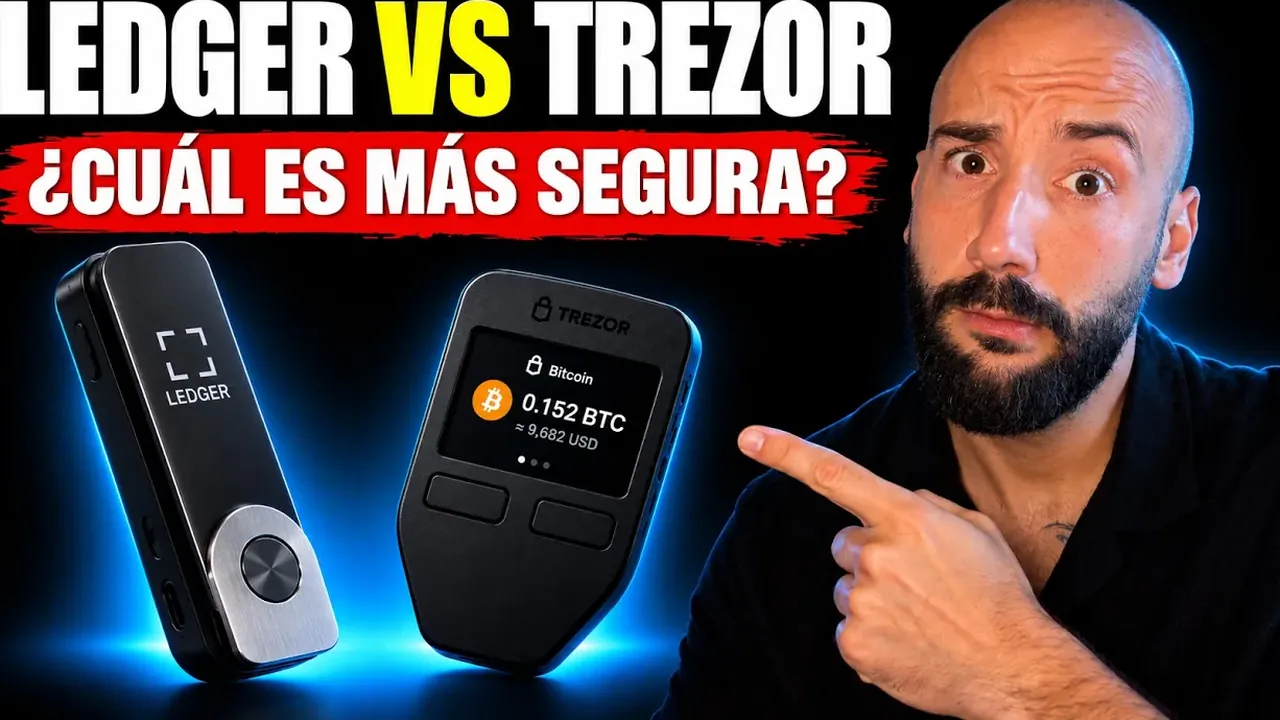
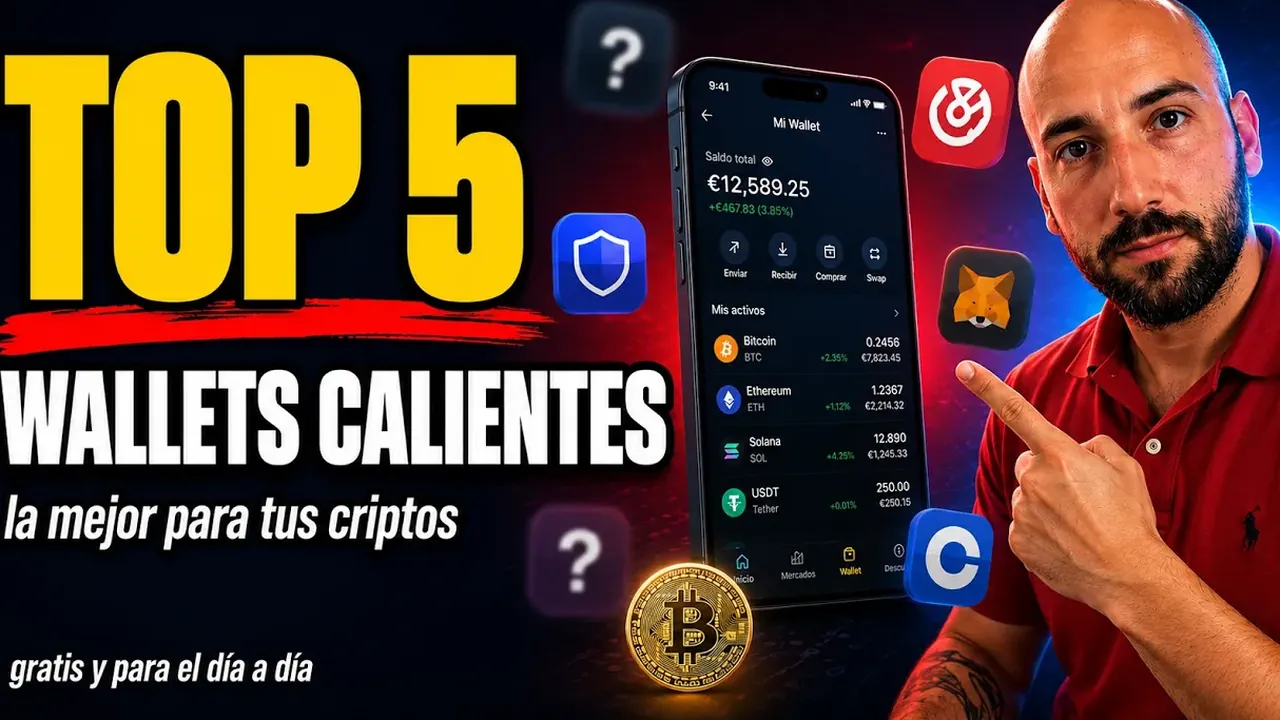
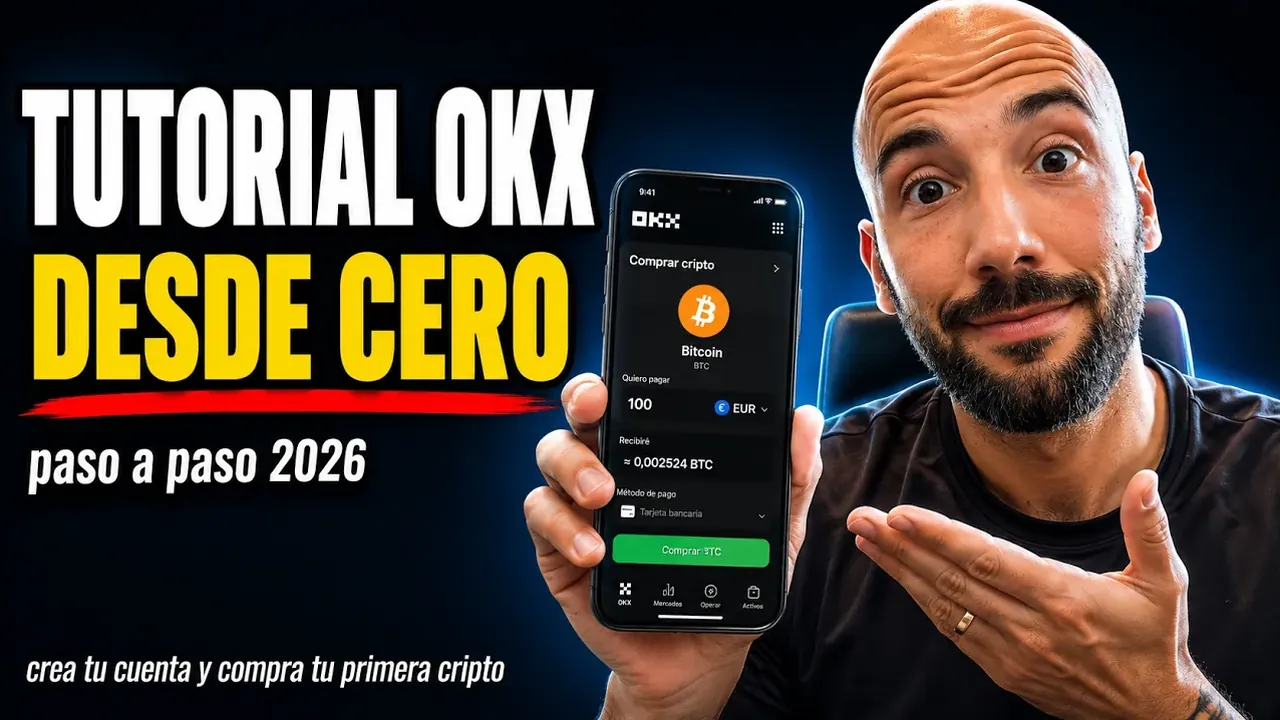
If you already know you want a hardware wallet, in Security I compare the best cold wallets and lay out the good and the bad of Ledger and Trezor; for everyday use, there are the best hot wallets. And in Exchanges I explain why I use OKX, weak spots included, in my OKX review.
05 /
Level 3: strategy, a plan instead of a hunch
A strategy is what you decide with a cool head so you don't have to decide with your gut when the price drops 20% in a week. That's why the risk management guide comes first: how much of your wealth it makes sense to expose, how to split it and how to write down in advance when you would sell.
Then comes Bitcoin DCA: buying a fixed amount at regular intervals, whatever the price does. It doesn't remove risk or guarantee profits, but it takes away the obsession with timing the bottom and leaves less room for impulses. Its biggest virtue is that it's boring, and in crypto that's an advantage.
In the DCA video I explain how it works and how to set it up step by step to automate your purchases, aimed at people who don't want to stare at charts all day or become trading experts.
06 /
Level 4: trading, last on purpose
Trading sits at the end of the map for an uncomfortable reason: most people who try it lose money. When the European Securities and Markets Authority (ESMA) restricted CFDs for retail investors in 2018, it noted that between 74% and 89% of retail accounts lost money on these products, and it capped leverage on crypto CFDs at 2:1. That isn't meant to scare you. It's the realistic starting point.
If you still want to learn to trade, the technical analysis guide teaches you to read a chart: candlesticks, trends, support, resistance and indicators such as RSI. Always pair it with the risk management from the previous level; without it, technical analysis just helps you lose money in style. In the trading videos section you'll also find tutorials on Japanese candlesticks, RSI and MACD.
Before risking a single euro, watch the video comparing trading with long-term investing. It explains why most traders lose, what swing trading is, why higher timeframes are more reliable and the stat about the five days that decided a whole year of Bitcoin.
Chapters (7)
07 /
Level 5: taxes in Spain
Taxes are the level everyone leaves for last and the one that causes the most nasty surprises when tax season arrives. The basics, according to the Spanish tax agency's practical manual: if you're a tax resident in Spain, selling crypto for euros creates a capital gain or loss that goes into the savings base of your personal income tax (IRPF), and swapping one crypto for another counts too, even if you never touched a euro. If you sell in parts, you're deemed to sell the coins you bought first (FIFO).
On top of that there are reporting obligations, such as form 721 for virtual currencies held with providers abroad, and more data sharing between countries: under the EU's DAC8 directive, since January 1, 2026 crypto-asset service providers collect data on their EU-resident clients' transactions to pass on to tax authorities.
The crypto taxes in Spain guide makes it concrete: which transactions are taxed, how the gain is calculated and which forms may apply to you. It's for you if you've sold or swapped anything, however small. The tax agency doesn't care whether the trade felt important to you.
08 /
How to study crypto without losing money
Learning costs time. It shouldn't cost you money. This method works at any level of the map:
- 01
Practice without real money
Many platforms offer demo accounts or paper trading: you trade with a fictional balance at real prices. Use one for at least a month before putting in a single euro, and treat that balance as if it were yours, or the practice is worthless.
- 02
Start with small amounts
Your first purchase and your first transfer to a wallet should be amounts you can lose without drama. A mistake with 20 euros is a cheap lesson; with 2,000, it isn't.
- 03
Keep a journal
Write down what you buy, why, at what price and what you'll do if it drops 30%. Review it every month. A journal exposes what your memory prefers to forget, like always buying right after a rally.
- 04
Go to primary sources
The Bitcoin whitepaper is nine pages long and free to read. Each project's official documentation, such as ethereum.org, tells you what it actually does without the marketing filter.
- 05
Read what supervisors say
If you're in the EU, ESMA's MiCA page hosts the interim register of authorized crypto-asset service providers, and Spain's CNMV keeps its own register plus a list of unauthorized firms. In October 2025 the EU supervisors published a two-page joint warning on crypto-assets that's worth reading in full.
Be alert to the risks of such advertisements, especially on social media where influencers can be incentivised to advertise certain crypto-assets.
Yes, that applies to this channel too. That's why my video descriptions keep repeating the same line: this is NOT financial advice, always do your own research. Check what you hear here against the sources above before you move your money.
The seven-mistakes video is the perfect companion to this method: it counts down, from seventh to first, the errors that cost beginners the most money. Number one is the most dangerous of all.
Chapters (8)
And since many of those mistakes start in your head rather than on the chart, here are two more videos on psychology: why so many people buy at peak euphoria and sell in fear, and the three pieces of advice I'd follow if I started today, including the one about my biggest mistake, gambling.
Two videos on investor psychology: fear, euphoria and my biggest mistake
Aquí es donde se crean los millonarios
· 63 views
Si empezara en cripto con 20 años haría esto
· 123 views
09 /
Guides and videos: how they fit together
The guides and the videos don't compete; they split the work. The video is the way in: in fifteen minutes you get the idea, see the examples on screen and understand why the topic matters. The guide is the reference you come back to: dates, checked figures, links to official sources and the steps in order for when you actually do it.
An order that works: video first, guide second, then back to the video for any chapter that didn't click. The long videos are split into chapters (in Spanish), so you can jump straight to “Los riesgos reales (sin endulzar)”, the real risks, in the Bitcoin episode, or to “Con cuál quedarte según tu caso”, which one to pick for your situation, in the wallets video. If you want to go further, the Entiende Cripto series breaks down the market's most important cryptocurrencies one by one, and start from zero gathers every beginner video in one place.
A useful detail: market analysis videos expire, because they talk about that week's price. Guides and concept videos last for years. To learn, prioritize the second kind and save the analysis for when you already have a plan.
And to keep up without the noise, in the Blog I analyse what's happening in the market and in regulation, with sources linked. Posts are published in Spanish.
Three videos that go with the guides
Qué es Bitcoin y por qué puede cambiarte la vida — Guía completa desde cero
· 246 views
Qué es el halving de Bitcoin: el reloj que mueve TODO el mercado
· 70 views
Wallet FRÍA vs Wallet CALIENTE: cuál necesitas de verdad (guía 2026)
· 556 views
10 /
The glossary and all ten guides at a glance
The glossary is the most underrated tool on this site. Here are eight words that show up in almost every guide; once you've got them, everything else reads much more easily.
- Blockchain
- A shared record of transactions, grouped into linked blocks and kept by thousands of computers at once. Changing an old block would mean redoing all the work that came after it.
- Wallet
- An app or device that stores your private keys. The coins live on the blockchain; the wallet holds the key to move them.
- Seed phrase
- A list of words, usually 12 or 24, that restores every key in a wallet. Whoever has it controls your funds.
- Exchange
- A platform where you buy and sell crypto with euros. If you leave your coins there, the platform holds them for you.
- Halving
- The cut by half of Bitcoin's block reward every 210,000 blocks. The April 2024 halving brought it down to 3.125 BTC.
- DCA
- Buying a fixed amount at regular intervals, without trying to guess the best moment.
- MiCA
- The EU's Markets in Crypto-Assets regulation. It requires authorization for anyone providing crypto services in the EU.
- Volatility
- How much and how fast a price moves. A crypto can rise or fall sharply in very little time, even overnight.
And these are the ten guides, in the order I suggest reading them: